Movies free online

Showing posts with label movies reviews. Show all posts

Mila Kunis


The beautiful Mila Kunis, born in the Ukraine, got her biggest breaks by watching The Price is Right and lying about her age -- as a new arrival to the United States, she used Bob Barker's game show to improve her English, and at her audition for That '70s Show, she didn't tell producers that she was three years younger than their age requirement.

Now her voice, good looks and acting talent have been put to good use with voice work on Family Guy, music videos for Aerosmith and modeling for both Maxim and Stuff. In 2008, she appeared in two notable films -- Forgetting Sarah Marshall and Max Payne. She might like World of Warcraft, but there's not very much that’s geeky about Mila Kunis. Besides being a regular in magazines, she's also been featured in FHM's 100 Sexiest Women in the World 2008 list and Maxim's Hot 100 list the same year. Her different-colored eyes give her desirability a quirky and unique twist.

After eight seasons on That '70s Show, in 2008 Mila Kunis jumped to the world of film, with roles in the Mark Wahlberg actioner Max Payne and the breakout hit Forgetting Sarah Marshall. She hopes to continue to catch our eye in 2009's Extract, the new Jason Bateman-Ben Affleck comedy from director Mike Judge (Office Space).

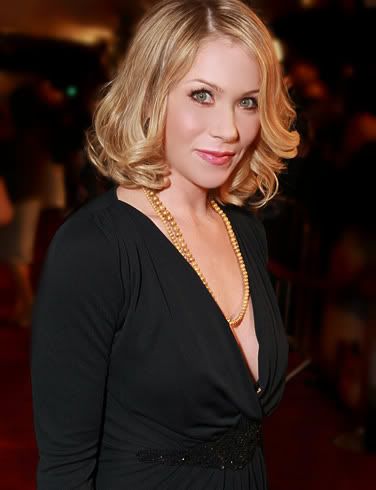
Christina Applegate


As Kelly Bundy, the sexy, stupid blonde who warmed our hearts on Married with Children, Christina Applegate helped the fledgling FOX network get off the ground in the late 1980s. In addition to film and stage work, she also starred in another sitcom, Jesse. Despite great reviews and even an Emmy nod, Jesse was canceled in 2000 after just two seasons.

In late 2007, Christina Applegate returned to sitcoms as the star of ABC’s Samantha Who? In August 2008, she announced that she had breast cancer. Following treatment that included a successful double mastectomy, her doctors declared her cancer-free. Christina Applegate began 2008 riding high on the success of Samantha Who? only to be humbled by a diagnosis of breast cancer. Shortly after her double mastectomy, she made an inspirational appearance at the Emmys, saying: “It's a great day. I've got a pretty dress on and lipstick, and it's something I haven't done in two months. It really feels good to be here.”

It feels pretty good to us too to have her back on TV and cancer-free, as she's a woman of incredible talent and charisma, not to mention a knockout beauty.

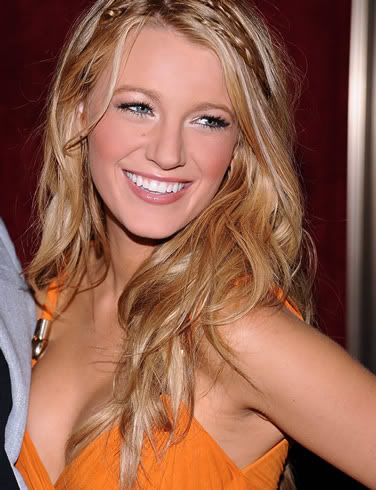
Blake Lively


Born into show business, Blake Lively preferred cheerleading over acting until she played Bridget in 2005's The Sisterhood of the Traveling Pants. The offers poured in, including one for the high school comedy Accepted, for which Blake Lively eventually received a Hollywood Life Breakthrough Award.

It's been onwards and upwards ever since for Blake Lively. She's Serena on TV's Gossip Girl, for which she won a pair of 2008 Teen Choice Awards, and she played Bridget again in a Sisterhood sequel. She also hammed it up as a transsexual partyer alongside James Franco in a memorable skit on Saturday Night Live. Blake Lively is hitting her stride as an actress and a babe. Besides her movie and television pursuits, she appeared on the cover of various magazines, including NYLON, Cosmopolitan and Lucky. Her projects aren't the most male-accessible entertainment, but it was hard not to notice this blond beauty, especially in her pro-Obama pitch during election season.

In addition to her continued television work, 2009 will see Blake Lively in more guy-friendly projects like the short-film compilation New York, I Love You (featuring Kevin Bacon) and the Keanu Reeves-Robin Wright Penn drama The Private Lives of Pippa Lee. We can't wait.

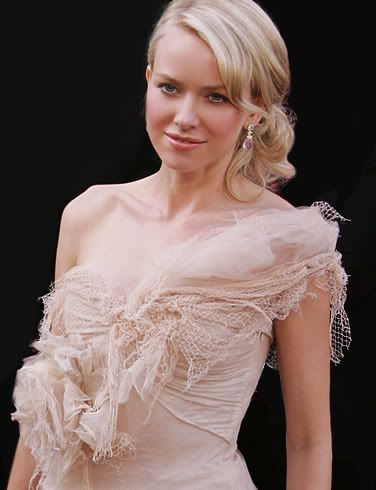
Naomi Watts


The "Queen of Remakes" nickname that Naomi Watts carries doesn't do justice to her acting talent. Trained in acting since childhood, including a stint at North Sydney Girls High School with Nicole Kidman as a classmate, Naomi Watts started her career in Australian television before earning major kudos in David Lynch's bizarre Hollywood odyssey Mulholland Drive.

While some of her biggest hits (King Kong, The Ring) have indeed been remakes, and there are rumors of another one on the horizon (2011's The Birds, with George Clooney), the Oscar-nominated Naomi Watts has also shown her diverse talents in highly praised films like 21 Grams and Eastern Promises. 2008 featured Naomi Watts in yet another remake, the perpetually creepy Funny Games.

Naomi Watts is a natural beauty with looks that the camera loves and that audiences desire. To date, she's been singled out by People (50 Most Beautiful People, 2002), FHM France (100 Sexiest Women in the World, 2006), FHM UK (Most Eligible Women, 2006), and us (AskMen.com's Most Desirable Women, 2006).

There was nothing sexy about Naomi Watts' performance in 2008's Funny Games. As the strongest voice in a family being held hostage, she was decidedly unglamorous -- and unquestionably talented. In 2009, she teams up with Clive Owen for the thriller The International and her pal Nicole Kidman for the twisted drama Need. She also has roles in We Are All the Same and Kicked, Bitten and Scratched.

The Fog of War


This brilliant work by director Morris is the stuff of life. And death. It arouses the most basic moral and immoral questions of being human through an enormously complex and yet simple man, Robert Strange McNamara. It seems no coincidence, his middle name, as we get to know him in all his cleverness and contradictions. Morris subtly illuminates, literally through McNamara's eyes, what it means to have power over life and death. Like God. There is something almost spiritual in McNamara's eyes, edited against searing images of, well, graphs, statistics, memoranda, bursting firebombs and nuclear mushrooms, almost all rarely seen-before footage. The eyes are the soul of this film - McNamara's are a combination of supreme confidence and extreme doubt. But not only his eyes - for example, we see President Kennedy's eyes frozen in the lens as he tells the nation of imminent nuclear war in 1962, a look that would make a Marine shiver. This new interview technique ("interrotron" ) draws us into what? War? Peace? Honor? Life? Power? Evil?
Born 85 years ago, McNamara is the quintessential man of his time, what Brokaw called the greatest generation, a sobriquet this documentary underscores. In McNamara's words he deplored the sorrow and pity of the four great wars of his lifetime; the trenches in France; the nuclear and indiscriminate firebombing of innocent Japanese; the debacle in Korea; the flaming jungles of Vietnam. His command of statistics is breathtaking. But it is the eyes that reveal an inner truth, the precise opposite of his concise, rational words - his 11 "lessons". We see a man who never found himself in harm's way. We see eyes so ironically blinded by a circa 1918 vision of duty and honor that, though he loathed the horrifics of Vietnam, he was compelled to allow his true judgment to go unexpressed until nearly 60,000 Americans were dead. He was at once perhaps the most powerful man in the world and its most despicable. It is easy to see why a brilliant young President Kennedy would choose someone as Defense Secretary who seemed so like himself, but tragically without the courage. And why, with Kennedy's death, McNamara by sheer ambition and brilliance would ascend to the very pinnacle of power.

Yet, I couldn't hate this guy. Perhaps the most telling moment is McNamara's clear devastation at Kennedy's assassination 41 years ago, again told in his eyes and a rare, emotional choking voice. So it's difficult to blame him for all those deaths he might have prevented -- McNamara genuinely believed he was doing the right thing for his Presidents: through an obsessive sense of duty and loyalty. Now that his day of legacy approaches, he expresses criticism over the actions of others -- General LeMay and President Johnson are the favored targets. But McNamara cannot quite bring himself to admit his own mistakes of enormous proportions. Yet it's quite clear that he was one of only two men who could have ended the 7-year slaughter (of his term in office). Many may find that failure a reason to despise the man. I found it just human.

This film offers up no easy answers (certainly not his 11 "lessons'), but more importantly raises many fundamental questions. Philip Glass' elegiac, edgy scoring perfectly meshes with this thriller. An impressive and important contribution to understanding our nation's ambivalent past.

Wal-Mart: The High Cost of Low Price


'Wal Mart, The High Cost Of Low Price' is filled with first hand testimonials and some hard-fact figures that will help in validating your hatred of this greedy giant, and visually exposes those in other countries who are ruthlessly used as slaves to produce the cheap products you purchase when you patronize this monolith.

These "jobs" provided to the labor forces of India, China, Bangladesh, and Mexico are not 'good wage' jobs even for third world standards. The people are overworked, underpaid, and forced to work in sub-human conditions. These human beings make 13 to 17 cents and hour, and work 10 to 18 hour days without breaks, all so you can have that $1.49 blouse.

Exposed in this film are the squalid, rent controlled apartments in China, provided by the company, that put to shame the most rancid ghetto house in your hometown. And if the employee chooses not to live in these rat-infested housing developments, the rent is still deducted from their wages. Wal-Mart has managed to lower the work standards set for these hard-pressed, low wage, third-world countries that other companies are going to follow, sucking down the standards of working all across the world.

The manager of the Mexico factories went on a tour to make sure that working conditions were humane. He was fired when he reported that the conditions were intolerably inhumane. In his own words, he didn't think retaliation would be brought against him for doing his job.

If you think it was a good thing that America abolished slavery, then think again before you go into a Wal-Mart. Just because the US is no longer "importing" slaves, doesn't make it right to continue to use slavery in other countries to produce high profits for personal gain. Wal-Mart's practices are no different than bringing slaves over from Africa to pick our cotton, it's still a cheap way for the rich to get richer at the expense of human blood and sweat.

Intermittently inserted in the film is a speech made by Lee Scott to the high-end employees and stockholders of Wal-Mart, which sounds very much like an Amway pep-talk. Lee Scott's earnings for 2005 were $27,207,799.00. The average Wal-Mart hourly employee's was $13,861.00.

Interesting facts: After 9/11, the Walton's built themselves an underground bunker in case of another terrorist attack, costing millions of dollars that should have went into paying back the Government for having to subsidize their employee's un-affordable medical benefits.
The Walton family gave less than 1% of their wealth to charity. Bill Gates, not even a nice man himself, gave 58%.
The "Critical Need" fund, set up to assist Wal-Mart employees in emergencies, received five million dollars from Wal-Mart employees (making $13,861.00 annually) and only $6,000.00 from the Walton family, who made, collectively, 102 billion.
Wal-Mart actually had a commercial campaign about "buying American" while all their products come from sweatshops overseas.

Wal-Mart has refused to address crime statistics that show an upswing of violent crime in their large, remote, under-lit and un-protected parking lots, putting their customers in danger and taxing the local law enforcement. The State of California alone paid out 80 Million dollars in medical benefits to poverty-level Wal-Mart employees because the 102 Billion Dollar Walton family does not want to give their "associates" fair medical benefits.

There are many ways to hate Wal-Mart and its ilk, and many books out on the subject, but I recommend watching this DVD so you can actually see the slave workers and conditions overseas that these selfish billionaires exploit without passing down their profit to the "small people" who helped build their empire. The presentation could have used a little more snappiness, and the DVD starts out very slow, but keep watching and you will eventually see the monster peeking out from behind your curtain.
Stop shopping at Wal-Mart. Just stop. You don't need their cheap goods that fall apart two days after you bring them home, and it feels good to know that you make a difference by not supporting slavery. Enjoy!

Sicko


No matter what people may think of Michael Moore, they will be hard-pressed to counter his film "Sicko" with one of a contrarian view. I suppose "Sickohype" or Sickohypo" or "Let'em all Die" just doesn't have the same resonance as "Fahrenhype" did to challenge his previous film.

Perhaps as landmark as Jacob Riis's "How the Other Half Lives," "Sicko" brings the devastating cost and state of health care in this country to light beginning with people who have lived the American dream and expected to live their retirement independently and in comfort. Early on, Moore shows a working couple forced to sell their home to meet medical obligations not covered, and now depend on the charity of their children. Moore carefully singles out several cases of the twenty-five thousand emails he received that reveal the appalling state of health care in a country that nurtures that dream. (None of the stories or emails are about couples in separate bathtubs looking out over a vineyard).

First are the insurance companies that are out to make a profit. (Nothing's wrong with that). However, the profit is at the expense of the medical coverage and preventative care they can deny. If they cannot deny it outright or claim such care is experimental, they will pour through a patient's medical history to see if any condition occurred that was not mentioned or remembered in the application process. This will give the company the means to deny all claims retroactively. Incidentally, doctors receive bonuses for the most claims they can deny!

The next spotlight is on the pharmaceutical companies which are so expensive that many people must continue working well beyond their retirement years, years they should be enjoying, years when there is the greatest need for medication. In particular, Moore singles out the very new and complicated prescription plan, which is more expensive for seniors than ever before, but benefits the pharmaceuticals. (Thank you, Mr. Bush).

Besides our illustrious president benefitting from the contributions of pharmaceuticals, Moore identifies a host of other republicans who have had their hands in drug company pockets--including the lady who was going to provide universal health care in the first place--Hillary Clinton whose plan the drug companies spent $100,000,000 to defeat. Fourteen staffers who worked on the Seniors' Prescription bill, moved on to lucrative lobby positions with the same companies, and Billy Tauzin was hired as CEO for Pharma at $2,000,000 a year. In any other milieu, that is called bribery, corruption, and conflict of interest. In Congress, it's called the cost of doing business.

But what gives Americans a strong sense of pride is our belief that our medical system and healthcare, while flawed, is the finest in the world. Moore is quick to write "denied" all over that fantasy. We see in Canada, Great Britain, and France, how people receive first rate health care, from first rate physicians without having to sell their homes, decide which finger they can afford to save, and have a higher life expectancy than Americans. (Doctors in Britain are actually paid more for getting people into better health habits and regimens).

Misnamed socialized medicine by its detractors, socialized insurance works in these countries efficiently without people crowding in waiting rooms, being taxed to death (as the health companies would have us believe), or dying because they cannot afford the medication, or because the insurance company denied their claim. Moore implies that paying higher taxes makes more sense than losing your homes or retirement to catastrophic illness in what is now the leading cause of bankruptcy in the country.

Moore's direction is flawless. His graphics and humor are engaging; dry and deprecating. This is a film that may make you well-up with tears that a society could take such good care of its companies and business, and dump its destitute on the street. Moore succeeds in making you feel empathy for those who are poorly treated or not at all. He is able to make you think: "Can that happen to me?" or "If it can work there, why can't it work here?"

The special edition also offers more in-depth discussion of health care that could not be put in the original film. This includes conversations with people on the street, HR 636 brought before the house, Norway which has the highest standard of health care in the world. (Yes, it is free). Sadly it also shows some of the people from the film whose family members died for lack of treatment, or because they were turned away.

The final irony of the film is one of the more poignant. The man who runs the most virulent anti-Michael Moore website announced that he would have to shut down because he couldn't afford the hospital care his wife so desperately needed.

Guess what Moore did.

Religulous


GLOBAL WARNING: "If you do not have a Bill Maher, please invent or clone one. IT WILL DO YOUR COUNTRY GOOD". We, in the US have the original and are very happy with him.

I read in Variety about a few advanced "RELIGULOUS" screenings in Claremont California, (August 2008) and immediately hoped in my car, drove 40 miles and rushed to see the film. Happy I did.

The film is sharp, intelligent, real, thought provoking, educational and it is HILARIOUS! Though, sometimes I was not sure ... if I should laugh or cry? Cry for the foolishness and ignorance of so many of us who believe or believed in those clowns up there on the big screen. Let's not call them clowns, because I like clowns, but call them opportunists or entrepreneurs. It is a free country, THEY can sell anything that looks right from the outside and rotten in the inside.

The film eloquently showing us, RELIGION: Business for Grabs....fast and easy. "Religulous" would have been 24 hrs long if he would have included all religions and sects, but tackled only the major organizations and a few odd groups like the Jose Luis de Jesus Miranda. You will have a hoot listening to this impostor.

I loved the film, and I am recommending to ALL who have some common sense and open to intelligent conversation. This film will open more dialog than The DaVinci Code, and hope it will make "semi-believers" question their faith or at least see that all this Religious Business is nothing else but, well... business. I only wish Bill and his creative team, would have mentioned the Inquisition and the multitude of evil crimes, these religions committed since their existence. Than again, THAT WOULD NOT BE FUNNY.

Religious+Ridiculous=Religulous. What a great title and only after I watched the film, I realized how ridiculous were "almost" all who agreed to be interviewed, how selfish, how brainwashed and irrational ready to tell the world how they and "only THEY" will be saved at the end. I say almost, because there were some great people, including Bill's mother and a few ex-religious folks, who give us a good insight of their past. All the way through the film, Bill kept us laughing and informing. Sometimes amazingly serious and sometimes just plain funny.

Have a good time, go see, rent or buy the DVD. But caution: It is not for the already brainwashed poor souls or religious fanatics! They will get angry, shout, speak in tongs (like in the film), they will hear voices from god or find 1 million ridiculous answers for all Bill's questions. It is recommended for intelligent people, period.

Repo! The Genetic Opera


This movie is amazing! The scenes are very creepy and unsettling, but at the same time very appealing and artistically beautiful. Even if you hated the music or plot, which I didn't this movie alone for the scenery is worth a buy.

Now about the music. At first I was uncertain of how to feel regarding their musical numbers, and by the third song I was hooked. The lyrics in this are comedic at times, other times serious, and actually nearing the end there is a song that I think is pleasant, "I Didn't Think I'd Love You This Much," is the name of the song I believe. The vocals of lead Alexa Vega are great, strong, and defined. Even Paris Hilton surprised me as this is the first time I have heard her vocals, and it reminded me some some old school goth rock cd I'd listen to in high school. Finally, Sarah Brightman. What can I say about Sarah that anyone doesn't already know? Musical Wise, she was nothing short of spectacular.

Acting wise, I'm a big junkie for Bill Mosley and it was fun to see him pull off the comedic cult character he portrayed. Paris, actually did great acting, it surprised me how great Alex Vega did considering I had never seen her attempt anything like this, and I was surprised that Sarah Brightman could be as dark as she was in this movie. The casting meshed well and it was fun to see such big names in a movie that hadn't hit theaters in my area.

Art wise, the scenes were mind-blowing. There are scenes where there is much cgi used, but overall it looks good, and that's saying a lot for me considering I hate cgi. Also, the make up was great with good effects, example, if the box hadn't said Paris was in this I doubt I would have recognized her until the end.

Overall, I rarely say this.... But I wish I could give this a higher rating then a 5 star. I will be buying the soundtrack as soon as I complete this review. Repo! Will be played a second time tonight for my posse... Yes, it was that good.

Dr. Horrible's Sing-Along Blog


So it's nothing short of a miracle that I ran into this webcast musical. I'd never dipped in the pond of Whedon's work and at the time I wasn't a fan of any of the actors, but boy did that change.

I first heard about Dr. Horrible's Sing Along Blog from a couple weekly podcasts that I listened to and everyone loved it, so I gave it a try. I came out of the experience singing the catchy songs for weeks, seeking out the actors' works, and wanting to be a bigger Whedon fan.

The acting is spectacular. Neil Patrick Harris is one of the best actors of his generation and he shows real and refined talent by both singing and acting as Dr. Horrible himself. It's a shame that Nathan Fillion, Captain Hammer, is not an exploding star. Felica Day, too, exhibits fine acting and singing skills and it's hard not to fall in love with her character, Penny.

The Whedon team (+ Mo) do an amazing job of weaving together fine acting, extremely catchy and well-written songs, and witty, yet thought-provoking dialogue in the tragicomedy that is Dr. Horrible's Sing Along Blog and I, for one, cannot wait for more.

In Plain Sight


I didn't catch onto this series until the first season was already over, but have been enjoying reruns on the USA network and Sleuth. And I have been anticipating the release of this series on DVD ever since. The characters are well developed, full of the flaws which accompany us all on life's path, and for the most part are very likable. That said, the over-the-top dysfunctional antics of Mom and Sis DO get old, and I find Jinx's character to be a waste of the talents of Leslie Ann Warren. She is absolutely the queen of quirky, but of all the characters, her storylines are the least entertaining, and in fact, bring down the entire show a notch. If I get tired of this series, this will be the reason for it. Mary certainly has dysfunctions of her own, but she at least, appears to be able to learn along the way. I'd like to see the dysfunction toned down. If these characters can all grow a bit, then I believe this series could have a long and successful run.

The interaction between Mary McCormack and Fred Weller's characters is especially delightful; it's the jewel of this series, and without it, I'm not sure how successful this show would be. What with his encyclopaedic knowledge of all things arcane and quirky, and his perfectly dry, straight-man delivery, he and Mary have a delightful kind of chemistry you don't see too often. In fact, I feel he really should have equal billing to Mary McCormack.

The Witness Protection aspect of the story makes for somewhat unusual storylines, which are MORE than welcome, and the show is well written. All in all, it adds up to a lot of fun. And as an extra bonus for me, it's filmed in Northern New Mexico, my favorite place in the world. What more could I ask for?

Back to the Future


Filmmaker Robert Zemeckis topped his breakaway hit Romancing the Stone with Back to the Future, a joyous comedy with a dazzling hook: what would it be like to meet your parents in their youth? Billed as a special-effects comedy, the imaginative film (the top box-office smash of 1985) has staying power because of the heart behind Zemeckis and Bob Gale's script. High schooler Marty McFly (Michael J. Fox, during the height of his TV success) is catapulted back to the '50s where he sees his parents in their teens, and accidentally changes the history of how Mom and Dad met. Filled with the humorous ideology of the '50s, filtered through the knowledge of the '80s (actor Ronald Reagan is president, ha!), the film comes off as a Twilight Zone episode written by Preston Sturges. Filled with memorable effects and two wonderfully off-key, perfectly cast performances: Christopher Lloyd as the crazy scientist who builds the time machine (a DeLorean luxury car) and Crispin Glover as Marty's geeky dad. --Doug Thomas
Critics and audiences didn't seem too happy with Back to the Future, Part II, the inventive, perhaps too clever sequel. Director Zemeckis and cast bent over backwards to add layers of time-travel complication, and while it surely exercises the brain it isn't necessarily funny in the same way that its predecessor was. It's well worth a visit, though, just to appreciate the imagination that went into it, particularly in a finale that has Marty watching his own actions from the first film. --Tom Keogh

Shot back-to-back with the second chapter in the trilogy, Back to the Future, Part III is less hectic than that film and has the same sweet spirit of the first, albeit in a whole new setting. This time, Marty ends up in the Old West of 1885, trying to prevent the death of mad scientist Christopher Lloyd at the hands of gunman Buford "Mad Dog" Tannen (Thomas F. Wilson, who had a recurring role as the bully Biff). Director Zemeckis successfully blends exciting special effects with the traditions of a Western and comes up with something original and fun.

E.T.


Both versions of Steven Spielberg's masterpiece are available on this limited edition DVD of E.T- THE EXTRA-TERRESTRIAL. The original 1982 and the 2002 re-mastered version are equally impressive. The minor cuts and restored footage doesn't add much. Sure, the CG E.T is impressive and there are some great moments put back in that make the film feel more complete. But the heart of the film stays the same. Differing from Spielberg's more strident films (JAWS, the INDIANA JONES films and JURASSIC PARK), E.T is the simple story of Elliot (Henry Thomas) who finds a friend from space and helps him to find his way home, hence the oft-quoted line "E.T phone home!". The iconic image of Elliot riding past the moon is one of the most memorable movie moments in cinema history, accompanied by John William's whimsical score (Another coup-de-grace par-excellence). The film itself is still emotionally involving and the peformances of the principal actors, especially Henry Thomas and Drew Barrymore are fantastic. Regardless of the film's 2002 theatrical dissapointment, Spielberg's masterful storytelling holds up to this day. One of my all-time favourites, E.T will always be remembered as one of the greatest cinema experiences in film history.
The DVD extras are very impressive. Startting off with Disc One, the 2002 version has an introduction by Steven Spielberg, a live performance of John Williams conducting at the 2002 premiere and an "exciting space exploration". Disc Two has the 1982 version. the extras include a "Spotlight on Location" featurette, The Reunion: The cast and filmmakers talk sbout the film. The Evolution and Creation of ET: hundreds of production photographs, conceptual drawings and original advertising in an interactive environment. Also included are theatrical trailers and DVD-ROM features. A must have DVD.

The Last Unicorn


Although anime is beginning to change people's minds, far too many Westerners still think of animation as a genre only fit for children. The Last Unicorn ought to be high on the viewing list of anyone who believes animation is just for kids--yes, it's a "cartoon," but it's also beautifully animated, with unique and unforgettable characters, and the storyline is as true to the original source material (book by Peter S. Beagle) as any movie adaptation I've ever seen.

In her unchanging, always-spring forest lives a unicorn (voice of Mia Farrow), ageless, wise and innocent, and without regret--unicorns can feel sorrow, but it's not the same thing. One day, when men come into her forest to hunt, she discovers that she is the last of the unicorns. With snatches of help and hints from a dizzy butterfly, she sets out to find the others. On her way she picks up an incompetent magician named Schmendrick (voice of Alan Arkin), a withered woman named Molly Grue (voice of Tammy Grimes), and eventually finds the kingdom of King Haggard (voice of Christopher Lee) and his son Lir (voice of Jeff Bridges). But in the changing, aging world of humans, can the unicorn even keep track of who she is and how the story should end?

The movie version isn't perfect. There are some awkward scenes, including a terrible duet by Mia Farrow and Jeff Bridges which never should have been included, and some scenes contain material such as mild profanity, bare breasts and depictions of death which might not be suitable for children. But there is an earnestness to this film, a magic in the way ideas are expressed, that's all too rare in modern filmmaking. This quality helps many viewers overlook the film's flaws.

So if The Last Unicorn is that good of a movie, why does it only rate two stars? Because the current U.S. DVD release is terrible. This is a full-frame release, ***not widescreen***. The DVD has poor cover art and offers zero special features. The actual transfer is grainy and blurry in spots, with no evidence of any kind of restoration work. The soundtrack has a distinctly tinny quality. In fact, the only reason one would purchase this DVD was if one had only a single copy of the film taped off television some 15 years ago and watched over and over until the VHS tape nearly wore out... rather like me, in fact.

Legend


LEGEND never really found an audience in theatres despite Ridley Scott and Universal's constant tinkering with the final cut. Seems many movies of this era were victims of audience test screenings, and the desire to give people a commercial product that went down easy -- see BRAZIL for a prime example of how studios think (the "love conquers all" version). So LEGEND was severely edited and rescored with a hasty (but often effective score by TANGERINE DREAM). It was short on plot and long on art direction, but sumptuous visuals and an all-out acting job by Tim Curry and make-up artist Rick Bottin made the movie an easy favorite of many fantasy fans. The movie looks stunning, and the story is a universal plunge into archetypes. Nothing wrong with that, it certainly worked for STAR WARS!
This DVD collection gives you two versions of LEGEND -- the original director's cut with over twenty minutes of added footage and the original Goldsmith score; and in addition, you get the original US release. In essence you get two different movies! The moods vary, the characters seem a little different, with whole new speeches and images to enjoy. If you are a fan of the movie or Ridley Scott it's a MUST-HAVE! This is what DVD dreams are made of. While many bemoan the fact BLADE RUNNER does not come with its 2 versions -- the fact is other than the narration and the happy ending, there is not MUCH different. But here we have a case where you can see what happens to a movie as it goes through development HELL. Fascinating stuff, and it comes LOADED with extras.

The only downside is the director's cut gets the royal treatment of a 5.1 sound mix while the other version gets a 2 channel Dolby mix, and even the video quality seems different with again the director's cut looking better than the theatrical release. But at last we can see a widescreen version of either cut, and we get a lot of extras that explain some of why the movie is the way it ended up. Beautiful images, two good soundtracks (I like both though the mood changes), and basically strong performances. LEGEND is a waking dream!

The Mists of Avalon


Most tellings of the King Arthur story focus on Arthur and Merlin, and perhaps mention Gueneviere as the unfaithful wench that broke up the great friendship of Arthur and Lancelot. Marion Zimmer Bradley took a twist on the story, telling it from the point of view of the 'dark witch' instead of the 'golden haired beauty'.
It's a tale full of the raw power of medieval England, where a belief in nature and natural spirits was vying with the approach of Christianity. It tells not only of women and men's different views of the world, but of love triangles, Christianity ousting the 'old ways', and a changing of culture.

The TNT miniseries version stars Anjelica Huston, Julianna Margulies, and Joan Allen in the girl-power production. Huston is the magestic matriarch of Viviane, the Lady of the Lake, who in most stories is just the giver-of-the-sword to Arthur. Here she's the protector of Avalon, the center of the old power, one that is being replaced slowly by the bells of Christianity. They in fact share the same physical space, but only those with the power to believe can cross into Avalon.

Margulies is Morgaine, Arthur's half-sister. They share a mother, but Arthur is born when Uther Pendragon lusts after Morgaine's mother Igraine and through deception beds her. Igraine and Viviane are sisters, but while Viviane defends the old ways, Igraine turns to the new (Christianity). The third sister, Morgause, is jealous of the other two and causes quite a bit of trouble.

This was always a favorite book of mine, so I was very curious how they would bring it on screen. The locations were gorgeous - it was shot in Czechoslovakia and has the primitive wildness that medieval England would have had. The costumes were also gorgeous, and the actors and actresses were top notch. I really enjoyed the relationship Morgaine has later in her life.

I do understand that certain of the themes are sensitive to a TV viewing audience. After all, Arthur and his half-sister Morgaine sleep together (not realizing they're related) when they're teenagers, and she bears a son from this union. Also, Arthur and Lancelot were attracted to each other in the book. These layers of sexuality added another dimension to the story, but they were a bit too risque for many viewers. The story was altered to change the way a lot of this was presented.

Also, the scene where Morgaine and Gueneviere first meet was supposed to contrast the beautiful-blonde-Christian vs the small-dark-pagan - at least that's how Morgaine saw it. Because the book is told from Morgaine's point of view, it's not always the reality, of course, but her impression of it. But in the miniseries they stripped away a lot of the dialogue so you loose some of that sense.

And then, near the end, it slips completely away, and where at the end of the book I'm thrilled to have gone on the journey, with the miniseries I wonder just exactly was the spot where they went wrong. I think the key is to watch it and think of it as a way to get people to read the book. It's really enjoyable as a good movie to watch, and if it gets more people to read the book, that's fine by me!

Frank Herbert's Dune


After seeing this miniseries and the original David Lynch theatrical release, I felt compelled to read the book and settle some plot inconsistencies (i.e. where did the weirding weapons go and where the heck was Duncan Idaho really supposed to die? In the Atreides compound during the initial Harkonnen attack or blown to bits by Harkonnen patrols in the desert spiriting Paul and his mother to safety?). The Sci-Fi series got it right.
I did not find Allec Newman annoying as some people did. Sure, he was wooden, but Paul was schooled in the controlling of his own emotions by his mother so that they did not betray him. After the Harkonnen attack his ruthless, unemotional behavior became more pronounced as he was immersed in the grim Fremen culture.

In terms of following the original story, the Sci-Fi Channel series is superior to Lynch's version. Sure, nobody seems to be able to get the fact that Paul Atreides is supposed to be 14-15 when the story starts and that he is described as being much darker complected than either actor who has played him in the past, but things actually happened in the sequence they were supposed to in the miniseries. People die where they are supposed to and events take place in the proper sequence.

Another nice element of the miniseries was the use of knives. Everybody has knives in the miniseries, just like in the book, where knives play an important part of Fremen culture. In the miniseries, characters are more likely to duke it out up close with knives than shoot blasts from weirding modules (which aren't even in the book).

Karel Dobry's Dr. Kynes and P.H. Moriarty's Gurney Halleck (characters who, despite their importance to Herbert's original story, were glossed over in Lynch's version of "Dune") are both given the attention they deserve in the miniseries. I thought both actors did well, as did the actor who played Stilgar (Uwe Ochsenknecht). I liked both Ochsenknecht and Dobry's quiet, understated menace. Despite their lack of emotion and stoic demeanor, you could instantly recognize them as the most dangerous men in the room. In the miniseries Gurney Halleck looks and feels like the battle-hardened ex-slave who would die for his Duke. If anything, Patrick Stewart's portrayal in the movie (when his character was on screen) was too "clean" to be Gurney Halleck.

Hey, Raban even had some dialogue in the miniseries (like he did in the book) instead of wandering around and giggling perversely while eating some indescribable meat product like he did in Lynch's movie. Feyd even gets to do things in the miniseries besides offering Sting's characteristic leer of the Lynch interpretation. Sure, his clothes stunk in the miniseries, but he was shown as being much more dangerous (both physically and mentally) in the miniseries than Sting was in the movie version. Stepping out of a steam-bath and cocking on eyebrow on cue don't concern me as much as the man who looks harmless and has terrible fashion sense, but is a cold-blooded killer. Ian McNiece surprised me as Baron Harknonnen, since I'm used to him in more effeminate, comedic roles. I thought he did a fine job as the Baron, mixing the vicious with the pathetic (now if only I hadn't seen quite so much of him wearing nothing but his suspensor harness...).

The miniseries does have its weaknesses. Once again, the actor who played Yueh fell short. I never once saw the tattoo Yueh had on his forehead that signified his imperial conditioning. How many times is this blasted tattoo mentioned in the book? William Hurt has as much intensity as a corpse. I do think that Lynch's movie made the Bene Gesserit more menacing with their bald heads and black gowns. The Bene Gesserit attire of the miniseries was laughable. In fact, hats were pretty terrible throughout the series. I also like Lynch's interpretation of guild navigators and Harkonnen "garbage bags with green eyeholes" shock troops. However, other visual elements, like the stillsuits (the primary wardrobe of the second half of the story) and vehicles, are more accurate in the Sci-Fi miniseries.

Is it perfect? No. Was it enough to cause me to buy a copy of the book to find out if they did a better/worse job? Yes. Is it more faithful to the original story? Yes.

Dune


A beginning is a very delicate time. In 1984, the long awaited film version of Frank Herbert's epic novel Dune came to the silver screen. What happened next? The worst box office disaster in history! Sad to say it, but mostly everyone who saw Dune hated it except for the few who actually read the book! I've always loved this movie but if I ever said that in public I was usually beaten with large rocks or a baseball bat. This review isn't really about the story of the film or it's direction. Its about the confusing truth of their actually being two editions of the 1984 film version of dune.
Now here is where the entire true purpose to this review comes in. Many may wonder, "why was I watching this on Sci-Fi channel and the director was Alan Smithee instead of David Lynch?" Well little Jimmy, the answer is complicated. David Lynch knew when he made Dune he was in trouble and cut the film down incredibly to make it fit the desired time limit. Lynch was slightly pleased with this cut of the film and hoped that that would be the last he would have to do with it... Wrong!

A few years when Dune finally was on TV, a special edition version was prepared containing an HOUR of extra footage. A new narration covers the film and practically spells out every bit of information to the audience this time. The studios were ready to show it when suddenly David Lynch says "Woa woa, I liked it the way it was!" and refuses to have credit for this new longer version. The studio then takes out Lynch's name and replaces it with the fake Alan Smithee who doesn't exist. With me so far?

The version of Dune available on DVD and VHS is the David Lynch version which in my opinion actually works better than the longer version. It cuts to the chase and doesn't drag as badly as Smithee's version does. For those of you who have never seen the Alan Smithee version, its not available to buy but it's shown on the Sci-Fi channel twice a year so there you go!

So, even though critics bombed it, audiences hated it, and David Lynch disowned the longer version, I still love this movie for some mysterious reason! If you're the type who likes weird artistic movies like 12 Monkeys, 2001, or Blade Runner, you will probably enjoy this. Also anime fans, this is right up your alley! For all you other people, get the hell out of here!

Serenity


A wonderous vision of the future started in the all too short run of the TV series Firefly continues in the big screen version of it, Serenity. The TV show and movie is about the crew of a star ship that is as much unlike the USS Enterprise as it can get. It's a ranshackle freighter skippered by Mal Reynolds, a man part Han Solo, part Jesse James. He was on the losing side of an intersteller civil war against the Alliance, a buraucratic, oppressive government that seems to consists of people who believe quite fervently they know better than other people how they should live their lives. Captain Reynolds and his motley crew, including his former second in command from the war, her husband the pilot, an engineer who is as cute as she is sharp with the hyper drive, a muscle bound mercenary in a constant state of mutiny, a preacher, a courtesan, and a doctor and his troubled (to say the least!) sister eck out a thin living doing odd jobs out on the frontier, some of them not exactly legal. They bicker and at times almost come to blows. Especialy due to the fact that the doctor's sister is wanted by the Alliance government for having been "enhanced" and damaged by a top secret government labortory.

Oddly enough, this crew might well save the human race among the stars. The story is a paean about how the unlikeliest people can become heroes and how the right of individuals to live free if an absolute. I hope there will be many more films in this "verse."

Night of the Living Dead


Okay...as I'd feared, my negative review of the John Russo-massacred "30th Anniversary Edition" of Night of the Living Dead has been lumped unwittingly into this product's review, so I' m writing this one to clarify.

This DVD edition is the best edition I've seen of the film yet. Anchor Bay may have raised the ires of legions of Living Dead fans by releasing the sacrilegious 30th Anniversary Edition, but Elite Entertainment did right by this new edition.

George A. Romero's personal appreciation appears in the back of this DVD -- this immediately restores our faith. And the contents don't disappoint -- the picture and sound are good, and though this doesn't exactly contain the richest batch of bonus materials (sets like the excellent 3-disc edition of Dario Argento's Suspiria and the recent double-disc Re-Animator both feature loads of extras), it is a nice solid collection. You get a Duane Jones interview (sadly with only audio and no image, but still great); an on-camera chat between Judith Ridley (Judy) and Marilyn Eastman (Helen); the hilarious student-film spoof "Night of the Living Bread" by Kevin S. O'Brien (which also appeared in the double-cassette VHS edition); two commentary tracks with Romero, Russo, Russ Streiner, Eastman, Karl Hardman and others. One very illuminating portion of this DVD for non-film-scholars is visually boring but informative -- several histories outlining the beginning of Romero's Latent Image company, on Hardman and Eastman's company, and how the two were married to produce Night of the Living Dead.

THIS is the right edition of Night of the Living Dead, the one to get for both fans and non-fans alike. It includes all the necessary people (notice that Russo, Streiner and Bill Hinzman were included in this release, despite their criminal participation in the 30th Anniversary Edition), and it presents the film the way it wants to be seen.
Now I'm waiting for a deluxe release of Dawn of the Dead and Day of the Dead...