The indestructible hopped-up hitman Chev Chelios, played to the hilt once again by Jason Statham, returns in Crank High Voltage, picking up where the first film left off -- except this time, Chelios is chasing a Chinese gangster who hijacked his heart and substituted it with a mechanical one that needs to be jolted with an electric charge to stay pumping. Back for the fun is Chev's girlfriend Eve (Amy Smart) and his physician Doc Miles (Dwight Yoakam), who, as luck has it, turns out to be an ex-heart surgeon. As Chelios delves deeper into the mystery surrounding his stolen heart, he discovers that the answers to his questions lie within the chest of a 100-year old head of the Triad gang, Poon Dong (David Carradine. The maverick directing/writing team of Mark Neveldine and Brian Taylor returns to inject more caffeinated craziness into Lionsgate's burgeoning action series, with Efren Ramirez, Bai Ling, Clifton Collins Jr., and Corey Haim rounding out the supporting cast.
Showing posts with label action. Show all posts
Showing posts with label action. Show all posts
Defiance
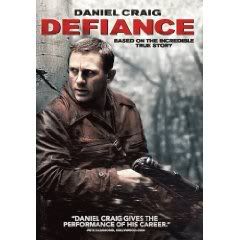
By necessity, one must focus on the survivors if one wishes to create a workable film about the Holocaust. For its only through the eyes and ears of the survivors (and their tales of suffering) that we can appreciate the enormity, the scope of what occurred to the victims of the Holocaust. Paradoxically, the tales of the survivors are nothing more than anomalies--which may give the wrong impression to the uninformed that the Holocaust was an ennobling event--that these tales of survival were somehow the rule rather than the exception.
Defiance is one such anomalous tale. Some critics have likened it to a critique of Jewish passivity--that the overwhelming majority of Jews went to their deaths without putting up a fight. And certainly that reputation is reinforced in 'Defiance' as the protagonists, Tuvia and Zus Bielski, stand out as Jewish outsiders who aren't afraid to fight the Nazis as opposed to the majority of the Jewish 'intellectuals', mostly freshly minted refugees from the ghetto, who end up as part of the Bielski 'community' within the Byelorussian forest.
But there is an excellent scene in Defiance, where Tuvia sneaks into the ghetto and confronts the head of the Jewish committee there, that demonstrates that the average Jew was not passive--simply bewildered and overwhelmed. Can you really blame the head of the Jewish committee when he doesn't believe Tuvia's tales of genocide? He says, 'yes, we've heard these stories, but who can really believe them?' Reports of atrocities reached the United States during the War but they were not really appreciated until the actual newsreel photos of truckloads of emaciated bodies were seen being bulldozed into ditches at Bergen-Belsen after the war was over.
The opening scenes of 'Defiance' are testament to the brutally swift nature of the Nazi genocide. In most cases, there was simply no time to think about resisting (or escaping). The Nazis came in, along with the help of the local authorities in the occupied territories and murdered the Jews in the blink of an eye. We see this very effectively illustrated in 'Defiance' after the Bielskis find their parents murdered on the family farm.
One of the picture's strengths is that it also illustrates the role of the local collaborators who assisted the Nazis. In a dazzlingly effective scene, Tuvia takes revenge by shooting the local police chief and his sons after they've murdered his parents. The collaborators aren't seen as monsters--quite the contrary, in a humanized portrait, the police chief begs for his life and insists he was forced to act at the bidding of his superiors in the Nazi occupation force (in an earlier scene, the police chief comes to a farm looking for one of the Bielski brothers who hides in a barn after attacking a group of Nazis--here the police chief is much more crass and arrogant--but still all too human!).
Nonetheless, Zwick, the film's director, should have had another scene involving the collaborators to balance out the 'sympathetic' portrait. The truth of the matter was that there were other of these local collaborators who were outright sadists, capable of incomprehensible, monstrous acts of brutality. Similarly, Zwick shows us a group of Jews in the forest who end up savagely beating a captured German soldier to death (despite his cries that he has a wife and children). While such acts of revenge did occur, it's hard to appreciate the context for their actions (it would have been better if Zwick had actually shown the Bielski parents, for example, being murdered and not merely the aftermath).
A good deal of 'Defiance' explores the conflict between the two brothers. Tuvia is the pragmatic one who comes to accept his role as a new 'Moses', leading his beleaguered group of 'intellectuals' to safety through the forest. At first he has only contempt for his fellow Jews who he regards as cowardly and passive. But as time passes, they earn his respect as they all become more proactive. Zus, on the other hand, wants to take direct action against the Nazis and joins the Soviet partisans as one of their fighters. I thought that the characterization of the Russians was one of the strongest parts of the movies. They are depicted sympathetically--shown both for their courage and brutality (Zus eventually leaves the partisans after he can no longer tolerate their anti-semitic stance).
A good part of 'Defiance' is taken up showing life in the forest camp. The characterizations are a mixed bag. Some of the characters are standard 'types' (the debate between the 'intellectual' vs. the 'spiritual' Jew is one such example). There are some good scenes depicting the malnourishment that the community had to endure along with a few obligatory romances. One scene I had a hard time believing was when Tuvia kills one of the food hunters who insists that his group gets extra portions of rations. Did that really happen? I'm not sure but it made for good drama.
I like Daniel Craig in this role a lot more than as James Bond; he gives a solid performance as an unlikely savior for his people. And Lev Schreiber is excellent as the tough as nails partisan who eventually reunites with his brother after a fractured relationship.
'Defiance' loses credibility in the final scene when the community battles a large group of Nazi soldiers backed up by a tank. I can't imagine that this actually happened. Nonetheless, I don't want to be too hard on Defiance. It's a film that will keep you absorbed from the opening credits. As a little known history lesson, it does its job. And certainly it was a worthy project to commemorate the deeds of the heroic Bielski brothers.
Gran Torino

Can Clint Eastwood go wrong? After striking gold a few months ago with the brilliant "Changeling," he releases "Gran Torino," another one of the year's best films. What a masterful storyteller Eastwood is, so focused on creating that perfect balance between story and character. He doesn't disappoint with "Gran Torino," a nearly flawless film that gives us characters we believe in and a story so compelling that it's virtually impossible to not be absorbed by it. What we have here is a cross-generational, cross-cultural story about people who can learn so much from each other despite being different. It's about regret, sadness, redemption, and growth, which isn't to say that it's conventional or archetypal; Eastwood plays a contemporary version of a Wise Old Man, someone who draws on life experience to teach an undeveloped youth. What's unique is that, regardless of what life has taught him, this Wise Old Man still has a lot to learn.
He has a name, of course: retired Ford factory worker Walt Kowalski. As a veteran of the Korean War, Kowalski has seen and done a lot of things he wishes he hadn't. He's bitter, antisocial, and politically incorrect. After his wife's funeral, we discover that he doesn't get along too well with his sons, specifically Mitch (Brian Haley) and his wife, Karen (Geraldine Hughes), who seem to believe that his age automatically makes him codependent and eligible for a spot in a retirement home. His grandchildren don't appreciate him one bit; the granddaughter only wants his stuff, hand-me-downs to take with her to school. They don't make things easy for him, but then again, he doesn't make things easy for them, either. It's a vicious cycle of resentment and miscommunication.
As this is being established, we're introduced to a teenage boy named Thao (Bee Vang), who lives next door to Kowalski with his large Hmong family. He's the black sheep of his deeply traditional family, always doing chores that the women are supposed to do. Having no direction in life, he's pressured by his cousin, nicknamed Spider (Doua Moua), to join his neighborhood gang. As an act of initiation, Thao must sneak into Kowalski's garage and steal his most prized possession: A 1972 Gran Torino. The attempt backfires. Some time later, Spider arrives with his posse and tries to abduct Thao. The resulting scuffle is broken up when Kowalski points his shotgun at the gang members and demand they get off his lawn.
Within no time at all, Kowalski's front steps are covered with tokens of appreciation from Thao's family, none of which go appreciated. But then Kowalski gets to know Thao's sister, Sue (Ahney Her), a remarkably independent young woman. Quick-witted and outgoing, she takes Kowalski's racial slurs in stride, believing that a good man lies behind the disgruntled façade. As he spends more time with Sue and her family, he begins to realize that he has more in common with them that with his own family, which, in all likelihood, scares him more than it brings him comfort.
When Thao formally apologizes for trying to steal Kowalski's Gran Torino, Kowalski puts him to work doing various chores, like repainting a house and fixing gutters. Hardly a scene goes by when he isn't verbally berating Thao, although it's obvious from the start that he's doing it to toughen him up, to make him believe that his life has a purpose and that he should actively be trying to find it. Part of this involves getting Thao to talk like a man. There's a priceless scene in which Kowalski brings Thao to a barber, who has been sharing insults with Kowalski for a number of years. Afterwards, Kowalski arranges for Thao to work at a construction site; the boss, as it turns out, is the perfect man for Thao to test his new vocabulary on. What Kowalski doesn't realize is that he's learning just as much from Thao, especially in matters of caring for other people. Eventually, Kowalski comes to the conclusion that Thao and his family will never be at peace so long as Spider and his gang are around.
The film's most fascinating character is Father Janovich (Christopher Carley), a twenty-seven year old priest who promised Kowalski's wife that he'd look after him upon her death and get him to confess. Initially, Kowalski wants nothing to do with Janovich, who gives sermons on matters of life and death yet has no real idea what it means to face your own mortality. Kowalski knows--he served his country in Korea. "What do you know about life?" Janovich calmly asks. "Well," says Kowalski, "I survived the war. I got married and had a family." There's absolutely no joy in his voice when he says this. Gradually, he begins to appreciate Janovich; he many not have all the answers, but at least he's willing to listen.
The brilliance of this movie comes not from the development of the characters, but from the way the characters interact with one another. Virtually no one is on friendly terms at the start, but by the end, there's an understated feeling that respect has been earned on all sides. Kowalski refers to Thao as his friend only once, and while it was nice to actually hear it, it still didn't come as a surprise given everything that had been leading to that moment. At a certain point, you just knew how Kowalski felt. "Gran Torino" is such a wonderful film, so carefully structured, so perfectly cast, so rewarding for the audience. To make just one great film in a year is the mark of real talent. But to make two great films in the same year, now that's the work of genius.
Transporter 3
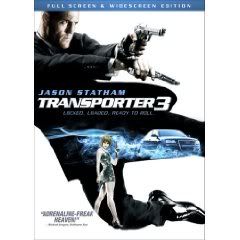
Frank Martin (Jason Statham) is back and this time he is forced to transport Valentina (Natalya Rudakova), an objectionable young woman, across Europe by a group of villains who have fitted Frank and Valentina with explosive bracelets. If either of them move more than 75 feet away from Frank's car, their bracelet will explode. Given all of the other reviews that I have read of "The Transporter 3", I went in to this film expecting to be disappointed and was pleasantly surprised when I wasn't. Although the script is not quite as good as Luc Besson's previous film, "Taken", this is more than made up for by the awesome stunts and martial arts sequences (choreographed by Cory Yuen, who was responsible for the action sequences in the previous two films). Two action sequences in particular, one involving Statham effectively performing a striptease while fighting half a dozen villains, and the grand finale on the train, are alone worth the price of admission. One of the main criticisms that had been leveled at this film is that the heroine is distractingly ugly and annoying. Although Rudakova and Statham seem to have absolutely no chemistry between them at all and I did wonder why Frank Martin was even remotely interested in Valentina, she wasn't so annoying as to ruin the film for me. Valentina is meant to be objectionable, and keeping that in mind, I actually thought Rudakova did a good job of playing her. As for her looks, I didn't think she was bad looking, just different, and I actually thought it was nice to see someone who didn't look the same as every other Hollywood heroine. As for Jason Statham, I am still not certain as to whether he can act or not, but who really cares. Statham became famous because of his personality and his martial arts skills and both are again on display. Sure this film is somewhat derivative of Statham's other film, in particular "Crank", but that didn't bother me, and it shouldn't bother other Statham fans either.
Incredible Hulk
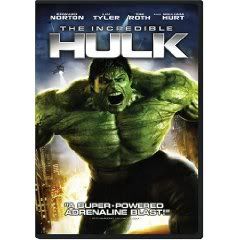
"THE MADDER HULK GETS, THE STRONGER HE GETS". Apparently, ol' Jade-Jaws has been rebooted for the screen under the moniker; "Incredible Hulk" with a new director; Louis Letterrier, a new script by Zack Penn and has a new lead actor in Edward Norton. To be honest, I'm one of the few who appreciated Ang Lee's "Hulk", appreciated but didn't love. Sure, it was too moody, nary a smile on anyone's face, full of human angst and fake looking CGI, but I thought it was reminiscent to the comic book when Paul Jenkins was at its helm. 2008's version of the Green Goliath trumps the 2003 version, with a different origin, more action and the CGI is a vast improvement over its predecessor. No, it is not a sequel to the 2003 film but a re-imagining that has close links to the "Hulk" (except for the color) who appears in Marvels' "The Ultimates" comic book. Bruce Banner (Edward Norton) is hiding out somewhere in South America, looking for a cure for his gamma-induced affliction, trying to keep his temper in check, keeping a low profile and avoiding a certain General Ross (William Hurt) who intends to make an army of super-soldiers from his own D.N.A.. After being pursued by a team led by Emil Blonsky (Eli Roth), Banner returns to America to pursue a cure and asks longtime love Betty Ross (Liv Tyler) for her help in finding a man named "Mr. Blue" who may be able to cure him of his gamma-powered alter-ego. Blonsky is hot on their trail and asks Ross to experiment further with the workings of gamma radiation and cellular manipulation with him as the guinea pig. Blonsky is a man who wants power--at any cost. The origin of the Hulk has been re-written from its 2003 version. Banner is a scientist who is unknowingly performing experiments on gamma applications to try to replicate a serum based on a World War II super-soldier serum (Captain America anyone?) that apparently got out of hand. Ross wants it as a weapon (no surprise) and Banner is the victim. Readers of Marvel's "the ULTIMATES" may see some similarities and may applaud this move. It was a good move to incorporate a new script to this 2008 film and Louis Letterrier seems to be the right man for its directorial duties. The script by Zack Penn in the hands of this director still has the usual touches of human drama and a moody atmosphere but at a better pace than Lee's rendition of ol'greenskin. The CGI effects is a step forward from its previous incarnation; an improvement but still not perfect. The Hulk looks more ferocious and feral than the 2003 version and the moments where he says "Hulk Smash" still puts a smile on my place. I was waiting on the line "Hulk is the Strongest one there is" but I guess this would ruin the film's mood, and become a bit too comical. The battle with the Abomination is the film's main draw. The fight is fierce, savage and above all, very hard-hitting. You feel the impact of the blows, and the snarls add a lot of animal-like ferocity. There is also quite a decent number of action sequences dispersed throughout the film. Banner's encounters with a Black-ops team in the first 20 minutes and with a small army contingent helps the film's pace. Hulk smashes cars, humvees, and crushes almost everything in sight; Hulk also "claps" with such devastation. There are also moments that put Hulk's relationship with Betty in the spotlight and the savage monster is truly only savage when provoked. Hulk gets to display some emotion and sensitivity in the presence of Betty. Nice touches, truly reminiscent of the comic book. Edward Norton's Bruce Banner may well be a little underdeveloped but by now, the film is probably relying on the fans to know what he is all about. Banner has that nerdy look but at the same time, strong and determined. Banner trains in the Brazilian style martial arts to try to control his anger by discipline. I almost wanted him to say: "Hulk knows Kung fu" but thankfully that didn't materialize. Norton gives a strong performance as our tortured scientist, I rather thought that he displayed the right emotions when one is afraid of losing himself. William Hurt is an outstanding General "Thunderbolt" Ross, his character is reminiscent of the other ruthless ones, Hurt has played throughout his career. Ross is a man of duty and has that `someone needs to get their hands dirty' attitude that gives his character a lot of depth. Liv Tyler is on par with Jennifer Connelly's Betty Ross. She's the anchor that pulls Bruce through the hardened moments. While the film has the tendency in becoming a bit overlong and fall to the pitfalls of too much melodrama and excessive display of human angst, the film has some cleverly placed bits of satire that assists the film's pace. You wouldn't believe Banner's attempts in communication in Portuguese; "..you wouldn't like me when I'm hungry." Stan Lee and Lou Ferrigno makes cameo appearances which also add some subtle bits of humor. Ultimately, "Incredible Hulk" is a success and an effective reboot from Ang Lee`s 2003 version. The film managed to stay focused in its context of a "Dr. Jekyll-Mr. Hyde" formula and the same time delivered a cleverly action-filled popcorn film that delivers the goods. There are hints of an underlying plan with Robert Downey's guest appearance and the hints of a "super-soldier" does give comic book fans something to look forward to. The film is a great comic book adaptation and it comes highly recommended from me who has seen Jade-Jaws' ups and downs since 1979.
Last Chance Harvey

That was once an observation about my preferences in movies, that I enjoyed stories that seemed like they might happen to you, could happen, and were just about nothing really. And after spending the afternoon in Camarillo, CA in an art theater of very senior citizens in audience I think many felt it might happen too, because they gave a nice small gentle applause.
Even with their canes, assistants and wheelchair gear (noted to me by my companion holding up my poorly performing leg so I could hobble in) we were an older crew.
What was the movie? Hum. The story of a man, a jazz piano commercial jingle writer, coping with a pressure sounding job nightmare in a digitizing universe, going to London to see his daughter be married. His name is Harvey Shine, that is interesting because of course he is just Dustin Hoffman reprising himself as a romantic duffer, struggling with the job, with the marriage of a daughter he's lost to a divorce long ago, as she folded into her mother's remarriage. He's put up at a hotel, away from the entire family, apart, odd wheel. It carries so well those outsider feelings of this man, that has a daughter who doesn't seem to know him too well, that he later will say in a conversation in the film she always seemed a bit embarrassed by him, as he notes he had a child within something that never was quite right. Never right. It took a toll, one he obviously regrets,it hurts, but he knows another price had to be paid by his child who has almost become another man's child. Hard, impossible to verbalize. We miss in life on many things. In a series of hits and misses he then at this same time runs into Emma Thompson, oops Kate Walker I think, working for the airline, struggling with her own anxieties about her own scene of awkwardly attempting meeting someone, with nervous apprehension-anxieties over this. And as it seems to happen sometimes, he rebuffs her (ironically on his plane flight he was rebuffed by a passenger not interested in his chat) turns from her and some airline survey, only later to find himself after a horrible day running back into her at the airport as he fails to get the plane and get out of there to an essential work meeting. And finding a rapport then, a shift in the mind and heart, I think he can see her now. See her. After he's lost enough to understand when he is found. Or has found. Seeing.
It reminded me somehow of years ago when I was in my early twenties.Just a vague familiarity. A Cuban man drove me from the airport to a hotel down close to the Modern. A nice cabbie that talked and calmed a very fear-filled kid trying to figure out her life. Just a kind man. That's all. I was very nervous, unsure where I was, he was a great help, and I must have just told him I was afraid of not having too much money so I couldn't afford to pay more than thirty dollars. I was afraid of being overcharged. I know he didn't do that, my funds were so limited. I told him that. And I tipped him. I think he helped me get a room at a place I could afford. There is a point. A few days later I ran into him at Central Park at a festival. He and I just happily chatted like friends as he played some gaming thing on a day I needed to feel safer. It's a small world but this movie reminds me of how sometimes life hugs you in a very small corner. It allows you to listen to the tune played on the jazz piano. It gives you the blessing of a nice glass of rose.( I cannot figure out the accent on that e) And someone might actually wait for you to finish your class, as this new acquaintance does for Kate, or even walks with you all night or takes the risk to follow where someone leads.Or takes a hand or asks a favor.
Actually I've read the plot summarized here and at on-line movie sites ten times or more, when debating whether or not to risk my going out walking with such serious problems going on underfoot, so it isn't what I'd want to say-another synopsis. It wouldn't get it anyway. He goes to the wedding, is hurt by being replaced by the step dad told by the daughter in walking her down the aisle, meets this interesting, wary and lovely woman, loses his job, takes a risk, suffers a arrhythmia, almost misses a chance that he needs, she needs. And then there is her mom, calmly wondering if the neighbor is smoking bodies in the shed.
It's a little cozy movie about the lovely warmth of holding a hand and strolling into the life of another, because it's just righter than retreat.
I loved the littlest things. That there is some very old man in her writing class reading his sexual passages, that Harvey collapses when made to walk the kazillion flights of stairs at his hotel in London, both elevators off, that Emma Thompson wears this lovely silk lined raincoat so beautifully, that he goes to the pre wedding dinner with a white linen suit, crumpled with the tag not removed by the store, you know those inky ones, that they allow us to feel all the awkward staring discomfort, that Kate rolls up a little jacket or sweater to put under a child's head when they are belatedly seated at a child's table after the wedding at the reception. That he plays her a tune on the piano and asks her to stay, calming her discomfort knowing his own. That he gives her, and she him, the benefit of the doubt. That Kate goes to the rail with such anxiety when he tells her he's there, going to be there, why he missed her, and she sits and looks and admits to all the real fear of being hurt.
And he just absorbs that, and says he won't let her down.
24: Season Seven
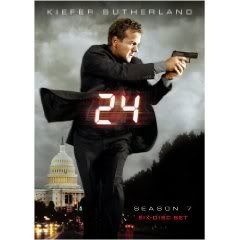
24: Redemption was aptly named, because of it's ties to the reality of the series. Redemption was in fact a redemption for the series.
Despite season 6 having been a horrible season, it still was one of the best shows on. Btw, for the record, and hopefully the producers, writers and studios will see this, but every time 24 has a "To be continued" cliff-hanger, the following season sux (for 24). Season 6 was another of those not up to 24 par seasons. I'm guessing the reason is, 24 uses these cliff-hangers and then when the new season begins, they say, "4 months later" completely ignoring the entire cliff-hanger! They did that in season 2 or 3 and again in season 5. Note to the wise, and those that matter: DONT DO THIS ANYMORE!
Taking the year off, rather than trying to force an 8 hour season last year was probably the wisest thing. Rumor has it that 24 had the first 8 episodes ready to go, but, they looked back on it, and decided to rewrite.
What has occurred is a reminiscent, if not fresh look at things. Returning this season, so far, is Bill and Chloe, and a confused Tony Almeda. Confused as we don't don't what side he is on, after his "death" and the death of his wife, Michelle. Nor do we know if he is finished for the season, or if he turns up again later.
The typical agency mole is the show's huge dependancy factor, as is the "Jack's bad... No Jack's good...ok, everyone, Jack's the greatest Superhero ever" roller-coaster. One thing that is not as predictable, is 24 has seemingly dropped the mini 4 episodic plots, and has gone much longer with the plots, which seem to help develop the story better.
Even in a bad season, like 6, the show will be intense. But, it certainly helps to have a strong plot line and not just filler stuff, just to make it to 24 episodes, and season 7 so far, has managed to get back to it's game, and with some tenacity.
The Shield

In the seventh, and final, season of FX's The Shield, everyone gets just about what they deserve to one degree or another. Whether it be crooked cop Vic Mackey (Michael Chiklis), who is working overtime to save himself along with working every angle and playing every side he can in the process, or his ex-partner Shane (Walton Goggins), whose plan to take out Vic and Ronnie (David Rees Snell) goes away, and when he is discovered, amounts to one of the absolute best scenes and moments in the show's entire history as he goes on the run with his pregnant wife Mara (Michele Hicks). In between all that, Vic's shaky alliance with Aceveda (Benito Martinez) hits a bump as he plays the Armenians, Mexicans, Salvadorans, and the Feds all against each other, as well as seeking immunity with the help of a shady agent (Laurie Holden), which leads to a powerful moment of Vic's admition of all the things he's done over the years in the season's penultimate episode. Everything truly does come together as the episodes wind down to the end, and everyone gets what they deserve in the process. There's some sub-plots abound that include Claudette's (CCH Pounder) failing health rearing its ugly head again, Dutch's (Jay Karnes) investigation of a possible up and coming serial killer, Dani's (Catherine Dent) attempting to keep her son out of Vic's reach, and Corrine's (Cathy Cahlin Ryan) betrayal of Vic. Throughout the season, Chiklis is at his top form, and is more magnetic to watch here than ever before. That being said, The Shield as a whole has earned its spot as being a groundbreaking crime drama, and in retrospect, the show comes to a more than fitting end as well.
Sin City

While it's probably a total cliche to say it by now, Sin City really is a wild thrill ride of a movie, and quite possibly the most entertaining thing that will hit theaters all year. Adapted by director Robert Rodriguez from Frank Miller's graphic-novel series, it's an energetic slab of neo-noir, complete with twisted characters, ambiguous morality, and deadly serious dialogue. For those who thought the Kill Bill movies weren't bizarre or violent enough, Sin City ought to seem like a stylish, action-packed gift from guy-movie heaven. It's filled with negativity, outrageously over the-top bloodletting, and some of the blackest humor known to man, but it all works anyway. I even managed to forgive the incessant voice-over narration, normally a rather lazy device, because it's so oddly poignant and poetic. It's not really that big a deal anyway, because this movie is so impressive visually that the characters could speak in gibberish and I'd probably still be moved to give it at least three stars.
As everyone (and probably their brothers) knows by now, Sin City was filmed using real actors against a black-and-white CGI background with some touches of color added for dramatic effect. It may seem like a gimmick at first, but Sin City is all about bringing the viewer into a sort of parallel universe, so this unconventional device works perfectly. Sin City is a movie dealing with lives on the edge, and it conjures up a delightfully dark, grimy, and gritty atmosphere to go match the depravity of its subject matter. Weighty themes and over-the-top violence abound here, and it's only fitting that the movie's look and feel should be so uniformly haunting. Consisting of three tangentially related stories occurring out of sequence, Sin City brings the viewer into an underworld populated by thieves, murderers, hookers, and dirty cops, and the morality is viewed entirely in shades of grey. In the Basin City of the movie, where the good guys are bad and the bad guys are even worse, violence is often a virtue, or at the very least a prerequisite for survival. If there's one redeeming value to Sin City's cartoonish ultraviolence, it's that it's painfully clear that its recipients generally deserve it.
Now, although I've gone on too long already, I'd feel remiss if I didn't talk about Sin City's staggering violence quotient. Yes, this an extremely graphic movie, and much of the violence is downright disturbing to watch (Elijah Wood's character being cut up and fed to a wolf is a prominent example, even if much of the violence in that case was implied), but it's just as true that context is an important factor when considering just how offensive such bloodletting is. Now, for one thing, Sin City is meant to be a piece of escapist cinema, so nothing that takes place onscreen should be taken too seriously anyway. After all, no one got offended during the scene in Monty Python and the Holy Grail when King Arthur cut off the Black Knight's arms and legs; that scene was meant to be funny and it was. Perhaps more to the point, the violence here is so ludicrously over the top from the opening scene that it's hard to imagine any rational person getting too upset. You have to just go with it; if you're the kind of person who makes it a point to be huffy and offended all the time you shouldn't be seeing this movie anyway.
Subscribe to:
Posts (Atom)